

Joystiq
Joystiq News
A robot has successfully performed "keyhole" intestinal surgery on pigs without any aid from humans, according to a from John Hopkins University (published in ). What's more, the Smart Tissue Autonomous Robot (STAR) handled the tricky procedure "significantly better" than human doctors. The breakthrough marks a significant step towards automated surgery that could one day help "democratize" patient care, the researchers said.
Laparoscopic or keyhole surgery requires surgeons to manipulate and stitch intestines and other organs through tiny incisions, a technique that requires and has little margin for error. The team chose to do "intestinal anastomosis" (joining two ends of an intestine), a particularly challenging keyhole procedure.
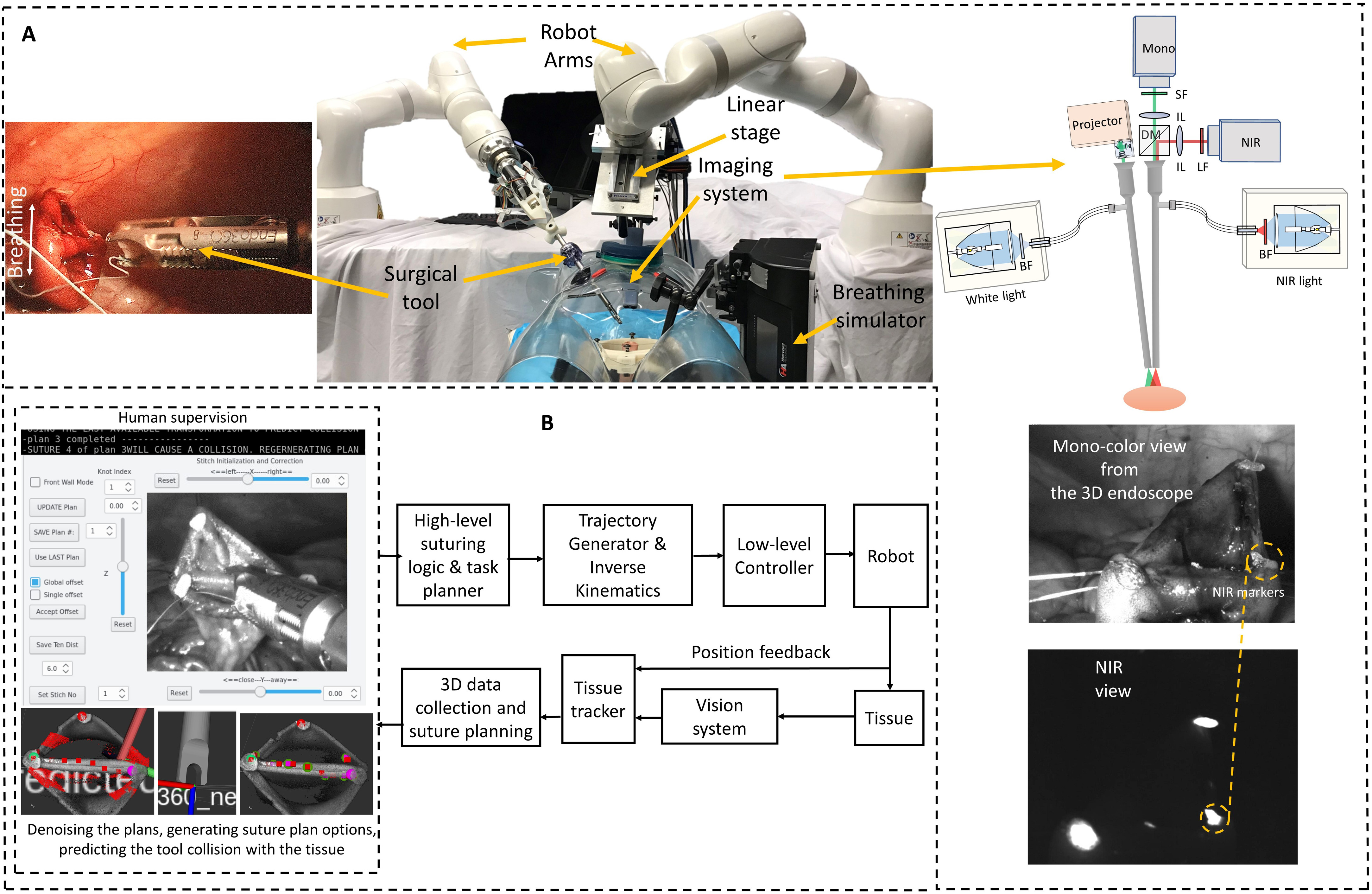
Soft tissue surgery in general is hard for robots due to the unpredictability. To deal with that, the STAR robot was equipped with specialized suturing tools and state-of-the-art imaging systems that could deliver extremely accurate visualizations.
John Hopkins
Specifically, it had a "structural light–based three-dimensional endoscope and machine learning–based tracking algorithm" to guide the robots. "We believe an advanced three-dimensional machine vision system is essential in making intelligent surgical robots smarter and safer," said John Hopkins professor Jin Kang. On top of that, STAR is the first robotic system that can "plan, adapt and execute a surgical plan in soft tissue with minimal human intervention," said first author Hamed Saeidi. Using all that technology, the STAR robot successfully performed the procedure in four animals
Laparoscopic surgery is minimally invasive compared to regular surgery, which helps ensure better patient outcomes. However, because it takes so long to master, there's a relatively small pool of doctors able to do it.
"Robotic anastomosis is one way to ensure that surgical tasks that require high precision and repeatability can be performed with more accuracy and precision in every patient independent of surgeon skill," said senior author Axel Krieger from John Hopkins. "We hypothesize that this will result in a democratized surgical approach to patient care with more predictable and consistent patient outcomes."
Console Bang News!
Laparoscopic or keyhole surgery requires surgeons to manipulate and stitch intestines and other organs through tiny incisions, a technique that requires and has little margin for error. The team chose to do "intestinal anastomosis" (joining two ends of an intestine), a particularly challenging keyhole procedure.
Soft tissue surgery in general is hard for robots due to the unpredictability. To deal with that, the STAR robot was equipped with specialized suturing tools and state-of-the-art imaging systems that could deliver extremely accurate visualizations.
John Hopkins
Specifically, it had a "structural light–based three-dimensional endoscope and machine learning–based tracking algorithm" to guide the robots. "We believe an advanced three-dimensional machine vision system is essential in making intelligent surgical robots smarter and safer," said John Hopkins professor Jin Kang. On top of that, STAR is the first robotic system that can "plan, adapt and execute a surgical plan in soft tissue with minimal human intervention," said first author Hamed Saeidi. Using all that technology, the STAR robot successfully performed the procedure in four animals
Laparoscopic surgery is minimally invasive compared to regular surgery, which helps ensure better patient outcomes. However, because it takes so long to master, there's a relatively small pool of doctors able to do it.
"Robotic anastomosis is one way to ensure that surgical tasks that require high precision and repeatability can be performed with more accuracy and precision in every patient independent of surgeon skill," said senior author Axel Krieger from John Hopkins. "We hypothesize that this will result in a democratized surgical approach to patient care with more predictable and consistent patient outcomes."
Console Bang News!