

Despite the COVID-19 pandemic, the smartphone market marched on in 2020, which in turn helped the smartphone camera sensor market. and Samsung are the two big players in the camera sensor market, and the South Korean firm appears to be closing the gap with its Japanese rival.
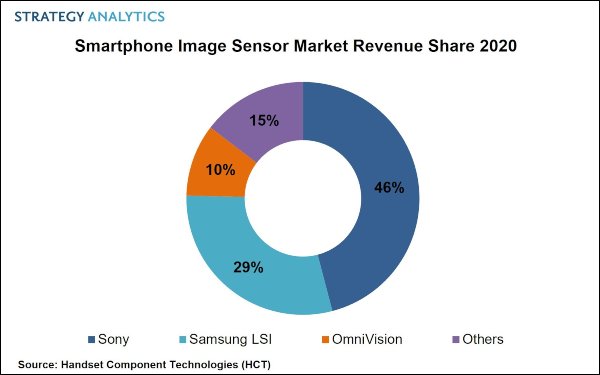
According to the data from market research firm Strategy Analytics, Samsung was the second-biggest smartphone camera sensor brand in terms of revenue share. , which makes ISOCELL camera sensors for smartphones, had a 29% revenue share in 2020. Sony, the market leader, had a 46% revenue share.
Earlier, Samsung used to have a revenue share of lower than 20%, while Sony used to control over 50% share of the market. It means that Samsung is slowly closing the gap with Sony, thanks to the launch of various high-resolution sensors and newer technologies. The company’s 64MP and were quite popular with smartphone makers. More importantly, the South Korean firm managed to fulfill orders that Sony passed on.
The Japanese firm had placed its bet on Huawei to ship more phones, but the Chinese smartphone giant was banned to do business with American firms, resulting in a huge dip in sales worldwide. Samsung, on the other hand, supplied sensors to the likes of Motorola, , Realme, , and .
With the launch of the , which is the , and upcoming sensors with , Samsung is well-placed to fight Sony. The company is also doing a great job in marketing its ISOCELL camera sensors. Samsung is also rumored to be, but it might not be intended to be used in smartphones.
The post appeared first on .
According to the data from market research firm Strategy Analytics, Samsung was the second-biggest smartphone camera sensor brand in terms of revenue share. , which makes ISOCELL camera sensors for smartphones, had a 29% revenue share in 2020. Sony, the market leader, had a 46% revenue share.
Earlier, Samsung used to have a revenue share of lower than 20%, while Sony used to control over 50% share of the market. It means that Samsung is slowly closing the gap with Sony, thanks to the launch of various high-resolution sensors and newer technologies. The company’s 64MP and were quite popular with smartphone makers. More importantly, the South Korean firm managed to fulfill orders that Sony passed on.
The Japanese firm had placed its bet on Huawei to ship more phones, but the Chinese smartphone giant was banned to do business with American firms, resulting in a huge dip in sales worldwide. Samsung, on the other hand, supplied sensors to the likes of Motorola, , Realme, , and .
With the launch of the , which is the , and upcoming sensors with , Samsung is well-placed to fight Sony. The company is also doing a great job in marketing its ISOCELL camera sensors. Samsung is also rumored to be, but it might not be intended to be used in smartphones.
The post appeared first on .